
Strategic plan 2026-2030
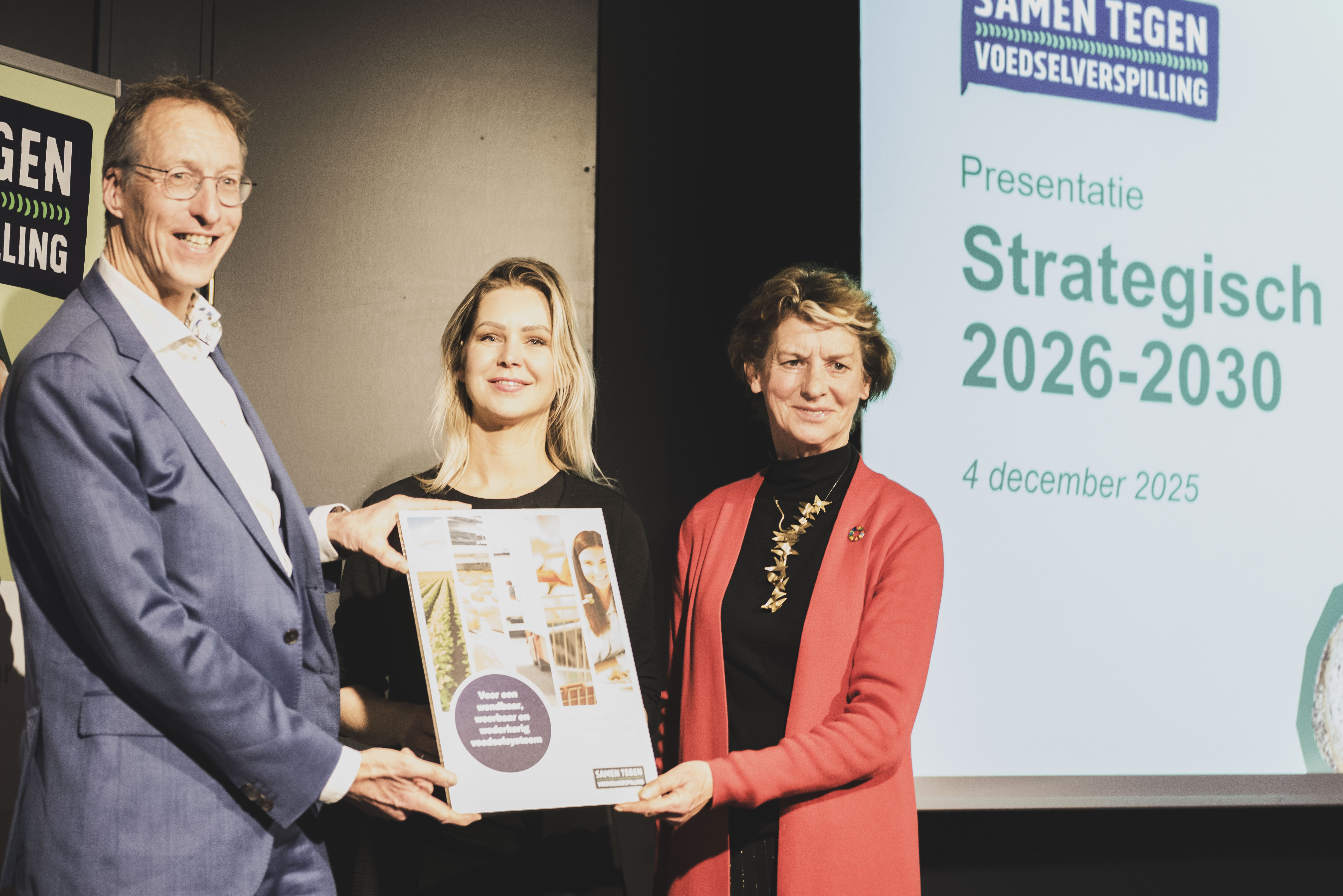
Halving food loss and waste remains the ambition. It is a vital building block of a Responsive, Resilient and Reciprocal food system. Achieving this requires strengthening, scaling up, and accelerating the food waste–free movement. The approach is outlined in the Strategic Plan 2026–2030.
The Dutch way to 2030
Food Waste Free United, together with its stakeholders, has developed a strategic plan aimed at achieving a 50% reduction in food waste by 2030. This plan was presented on 4 December to Minister Wiersma of Agriculture, Fisheries, Food Security and Nature.
Reducing food loss and waste by half remains the ambition. It is a key building block for a responsive, resilient, and reciprocal food system. To achieve this, it is essential to strengthen, expand, and accelerate the food waste free movement. How this will be done is set out in the Strategic Plan 2026–2030.
Chair of the Board Gerda Verburg and Director Toine Timmermans state: “Together, we aim to make the Netherlands one of the first countries in the world to reduce food loss and waste by 50% by 2030. In doing so, we lead the way in achieving Sustainable Development Goal 12.3.”
This should ultimately lead to a responsive, resilient, and reciprocal food system:
Responsive: A food system that can quickly respond to changing circumstances, such as fluctuations in raw materials, market developments, regulations, and climate change.
Resilient: A robust food system that is sustainable and capable of recovery, thereby ensuring continuity.
Reciprocal: A food system in which collaboration and shared value are central. All food chain partners, from producer to consumer, benefit from efficient use of resources.