Waste-Free Bread and Pastry Chain
From grain to lunchbox
Harvesting, baking, packaging and transporting: a lot of energy goes into our bread and pastries. Yet in the Netherlands, 700,000 too many loaves are still baked every day. About half of that is wasted by consumers at home, but there are also gains to be made further up the supply chain. For example, with industrial bakers, where in 2024 around 4.4% of outgoing bread was returned from supermarkets and mostly processed into animal feed. A great deal of waste also occurs in the pastry category.
A cluster of companies, knowledge institutions, civil society organisations and government bodies wants to tackle this together. They are working towards a more efficient bread and pastry chain - from grain to lunchbox - by preventing bread and pastry waste and exploring ways to add value to residual streams.
Does your company operate in the bread and pastry chain and do you want to take a more sustainable approach? Then join the cluster! Read the information on this webpage and send an email to office@samentegenvoedselverspilling.nl.

Video about the cluster
Activities in the Waste-Free Bread and Pastry Chain cluster
On the initiative of Samen Tegen Voedselverspilling (Food Waste Free United), the Waste-Free Bread and Pastry Chain cluster was established. In this cluster, companies from across the entire chain work together on business models and innovative solutions to prevent and reduce waste and losses, and to valorise unavoidable residual streams to a higher level. The goal is a waste-free chain in which valuable raw materials with nutritional value remain within the food chain. This has many positive effects, such as lower greenhouse gas emissions from the production of our food, reduced raw material purchasing costs, and less dependence on the international commodities market.
Many solutions for a more efficient bread and pastry chain already exist: from using data to bake precisely the right amount, to selling freshly frozen bread. To make an even greater impact, we want to change the rules of the game, with a focus on preventing returns from the supermarket. By, for example, making different agreements within the chain or rethinking how shelf space is organised.
The return rate of bread from supermarkets back to bakeries have declined. The data can be seen here (in Dutch). To reduce this further, it is important to keep exploring how production can be better aligned with demand and how agreements on minimum order quantities can be raised. This can increase production efficiency and make the product range less susceptible to waste, by phasing out slow-selling items. As returns decline, it becomes increasingly relevant to look at how further steps can be taken in the baking process.
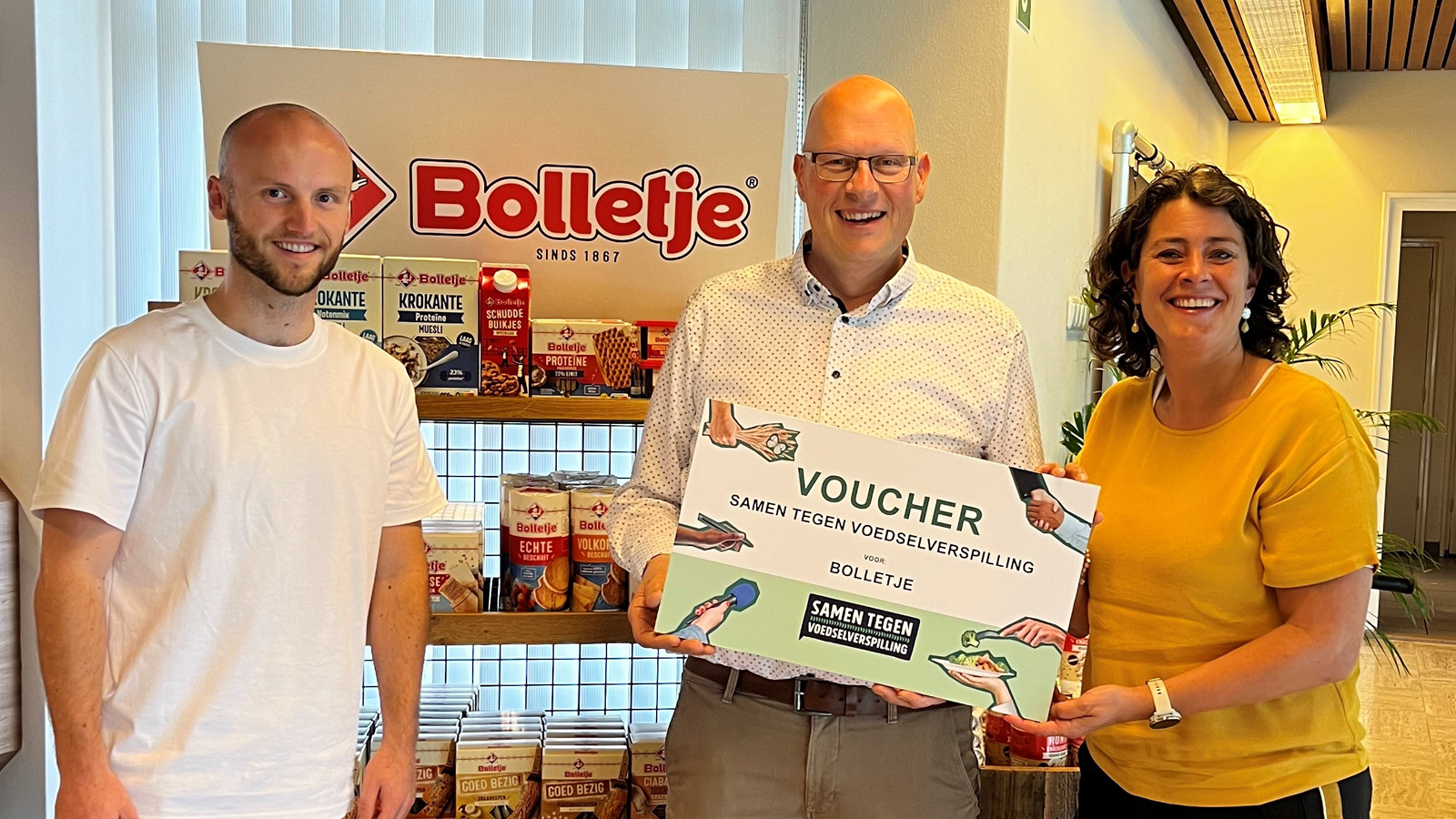
The cluster is also examining how products that are returned can be better incorporated into new products. The use of new technology also plays a role in preventing food waste and reducing residual streams. Bolletje received a voucher to work with QING to optimise their own production process using smart AI technology.
Toine Timmermans, director of Samen Tegen Voedselverspilling: "We are continuing to expand the cluster and want to reduce waste in this sector. We are looking at scaling up existing solutions with a relevant business model."
Who is part of the cluster?


Who is part of the cluster?
Participants of the cluster are: Koninklijke Amarant Bakkers, Bakery Sweets Center, Bakkerij De Paauw, Bolletje, European Bakery Innovation Centre (EBIC) van Sonneveld, Foodforecast, de Nederlandse Vereniging voor de Bakkerij (NVB), Poppies Bakeries, Royal Kaak, the Good Shit Company and Top Bakkers Groep. Samen Tegen Voedselverspilling (Food Waste Free United) acts as the driving force, and Wageningen University & Research (WUR) oversees the monitoring process.
Joining the cluster offers the following benefits:
Motivated network partners who want to work together on solutions.
Access to specific knowledge and data via WUR and the Netherlands Nutrition Centre.
Collaborative work on benchmarks through knowledge sharing.
A joint lobby for changes to laws and regulations.
Multiple knowledge, networking and inspiration events each year.
Participation in the cluster is free of charge, but does require active commitment from all parties to work on solutions and share knowledge. Participating parties are also required to become a stakeholder of Samen Tegen Voedselverspilling (Food Waste Free United).


Successes: completed and ongoing cases
Within the cluster, participating parties are working on many different cases. Some have already been completed, while others are still ongoing or in development.
Practical tips for bakeries
On behalf of the Province of Gelderland, Samen Tegen Voedselverspilling launched a project together with various bakers and supermarket operators based in Gelderland. Within the project, tips and tricks were gathered to prevent and reduce returns and bread waste. You can find the tips and tricks (in Dutch) via the link below. With these tips bakers and supermarkets can contribute to the waste-free bread chain.
Consumer campaigns
To reduce bread waste among consumers at home, Samen Tegen Voedselverspilling also launched several campaigns on this topic together with the Netherlands Nutrition Centre.
Awareness campaign 'Do you eat every slice too?' with stickers on loaves at bakeries and supermarkets, to encourage consumers to eat every slice of bread.
TV commercial ‘Hello bread eaters of the Netherlands’.
Online campaign 'Nobody wants to waste' with a video against bread waste.
Leftover recipe booklet featuring recipes from, among others, Eric Corton and Yvette van Boven, including several tasty recipe ideas for stale bread. [Download the PDF here]
Latest news
This is de latest news about activities of the cluster and participants.